|
Week ending: 28th December: Strathclyde Country Park, Hogganfield Park LNR
My walks with the camera were limited this week by “festive activities”, but I did escape for a
couple of hours to the peace and tranquility of local parks.
Wednesday and Friday, 24th and 26th December: Strathclyde Country Park
On Christmas Eve and Boxing Day morning I visited Strathclyde Park. The weather was brighter
on the first day which started at the Beach car park.
A flock of Greylag Geese was floating near the sandy shore.
A trio of Greylag hybrids paddle in…..
……to seek out any bread being handed out by people emerging from parked cars. A few Mute
Swans joined them. Opportunistic Jackdaws loitered around the larger birds, waiting to nick any
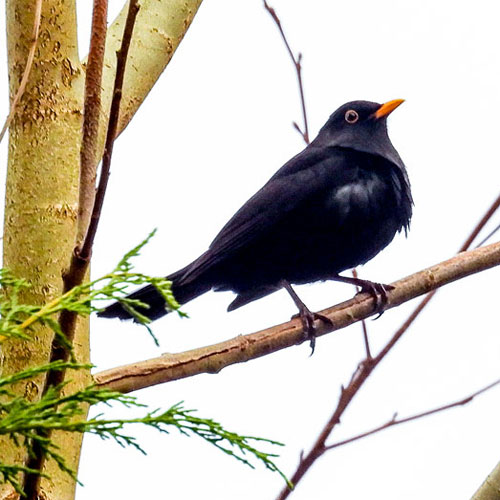
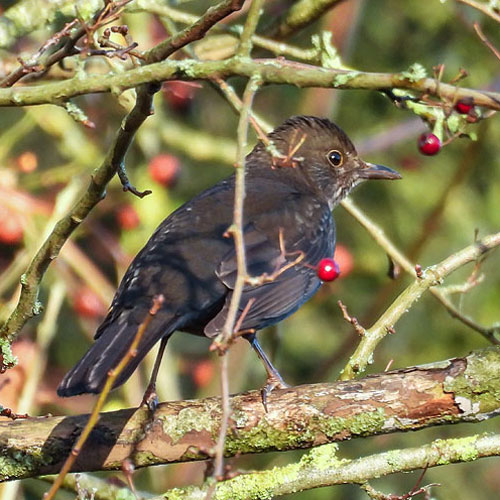
dropped bits of bread. I spotted a Dunnock and a Blackbird feeding on and around the
bushes.
| Greylag Gosse |
Greylag Goose Hybrid |
 |
 |
| Mute Swan |
Jackdaw |
 |
 |
| Dunnock |
Blackbird |
 |
 |
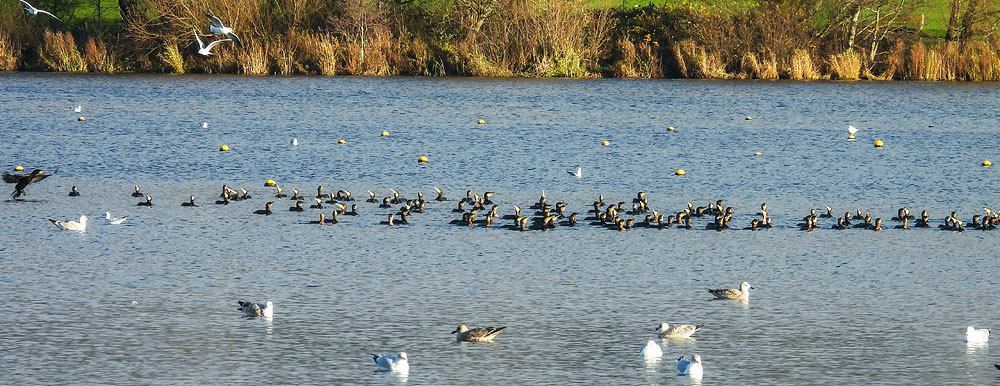
In an area of Strathclyde Loch which is just north of the island, in which the South Calder river
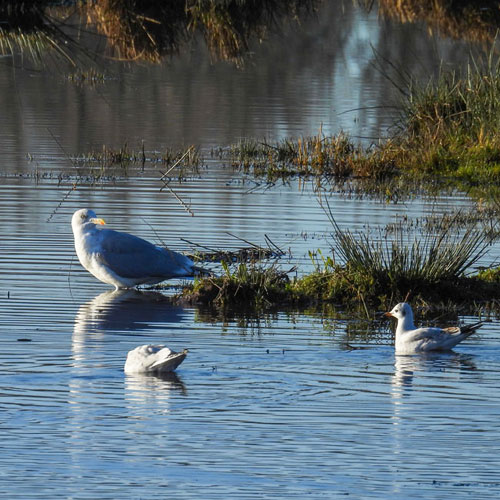
flows into the loch, many birds were gathered, such as Herring and Black-headed Gulls.
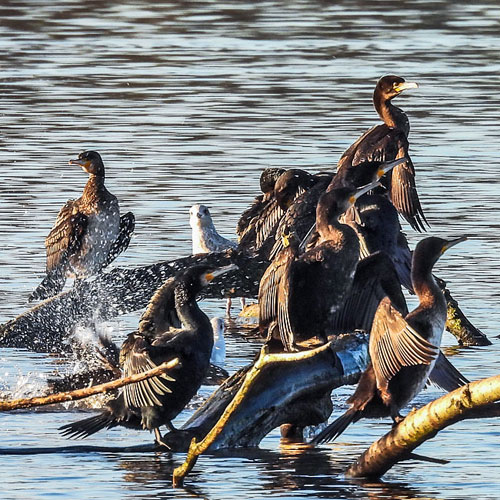
The dominant species, though, were the Cormorants, of which there were probably over a
hundred.
They can often be seen feeding in large groups and they gather afterwards to dry their wings,
perching on the tree trunks which lie in the shallow waters not far from the shore. Goosanders and
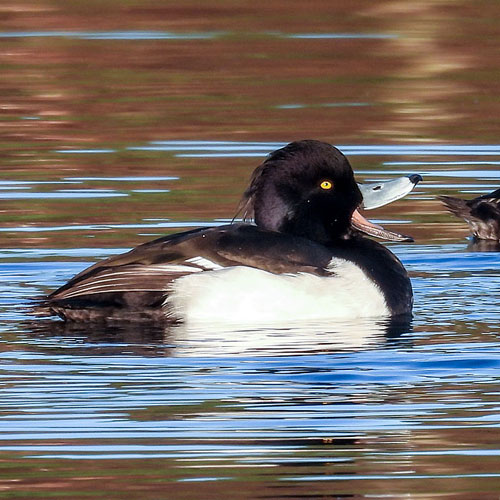
Mallards are also active in that area, as well as Goldeneyes and Tufted Ducks (not shown due to
the fact that they were far out and against the sunlight). However I did spot a much rarer bird - a
Little Egret, which was prowling in the reeds at the river mouth.
| Cormorant |
Goldeneye |
 |
 |
| Drake Goosander |
Female Goosander |
 |
 |
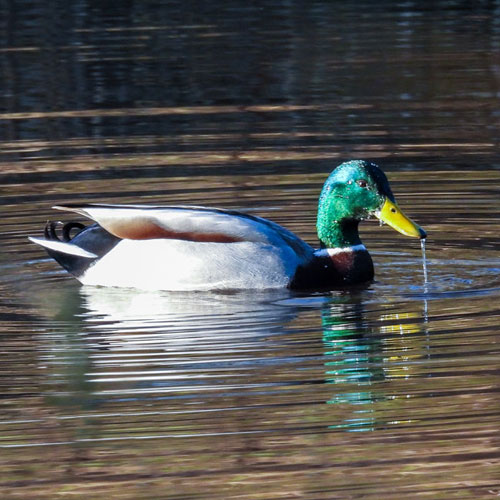
| Drake Mallard |
Little Egret |
 |
 |
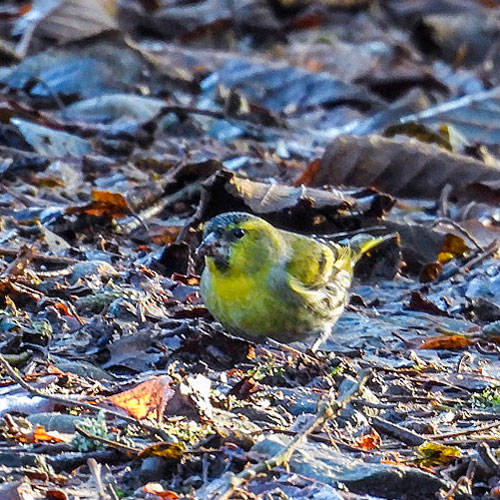
I circled back to the car park via the road and was surprised to find small birds feeding in leaf litter
on the roadside verges: Siskins , Bullfinches and Goldfinches. I also spotted a Robin on a
molehill on grass near the road.
| Siskin |
Female Bullfinch |
 |
 |
| Goldfinch |
Robin |
 |
 |
My route took me though a wooded area where there were more fallen trees decaying near the
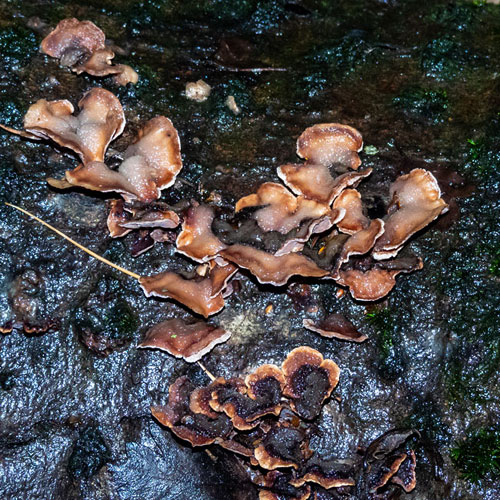
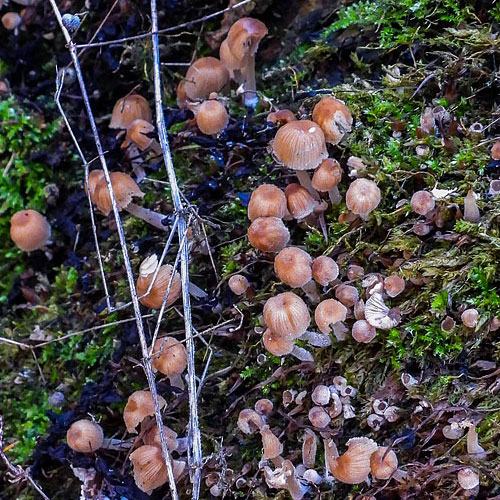
footpath. I was delighted to find some fungi assisting the decay-process: Velvet Shank, and Candle Snuff fungi, Coral Spot, Hairy Curtain Crust and Glistening Inkcap . As
I emerged from the woods I caught sight of Thrushes ) high in a tree. They were a mixture of
Fieldfares and Redwings. Light from the low Sun gave the birds an orange tinge.
Friday and Saturday, 26th and 27th December: Hogganfield Park LNR
On Boxing Day afternoon I found myself walking around Hogganfield Loch. Of course I had my
camera with me just in case I saw anything of interest. The first quite interesting thing I came
across was that there were no birds in their usual haunt on the loch beside the car park. The
problem was solved when I saw a gathering of Mute Swans and Black-headed Gulls, further
around the loch, being fed by a person standing by the kiddies’ playground.
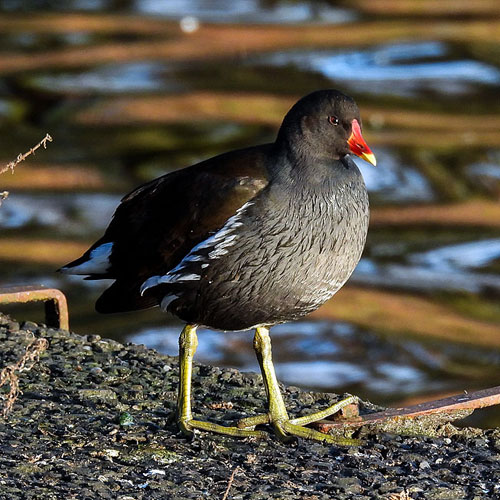
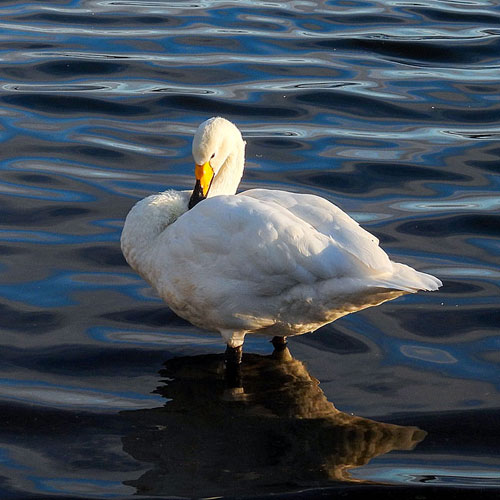
Near there, there were a few Goosanders, a Moorhen and a couple of solitary swans: a Whooper
Swan and a Mute Swan.
| Drake Goosander |
Moorhen |
 |
 |
| Whooper Swan |
Mute Swan |
 |
 |
Next I walked to the south side of the loch. Below is the view from there, looking north.
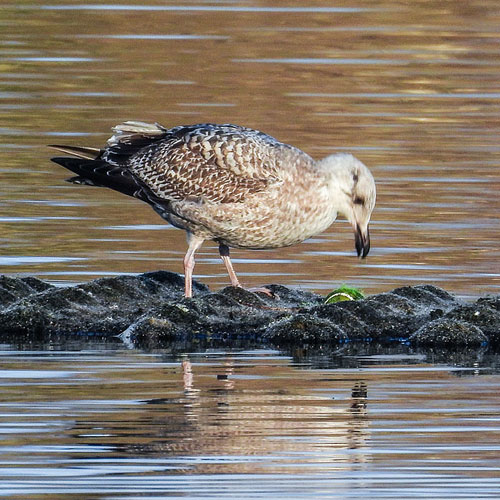
A couple of Magpies were foraging in a deserted artificial island, until they were displaced by a big
Herring Gull juvenile. I was able to get a lovely, well-lit shot of a drake Goldeneye paddling in the
channel between the island and the lochside. Nearby there was also a lone Mute Swan cruising
past.
| Magpie |
1st Cycle Herring Gull |
 |
 |
| Goldeneye |
Mute Swan |
 |
 |
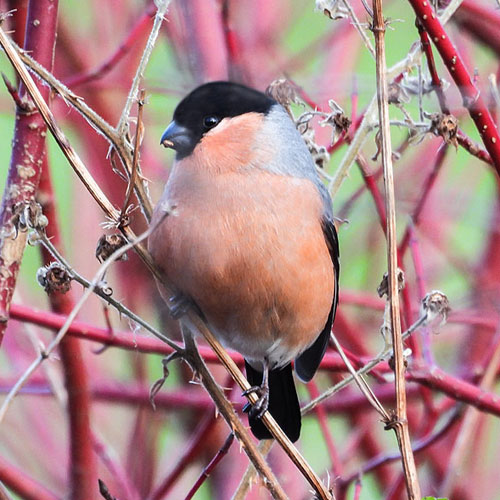
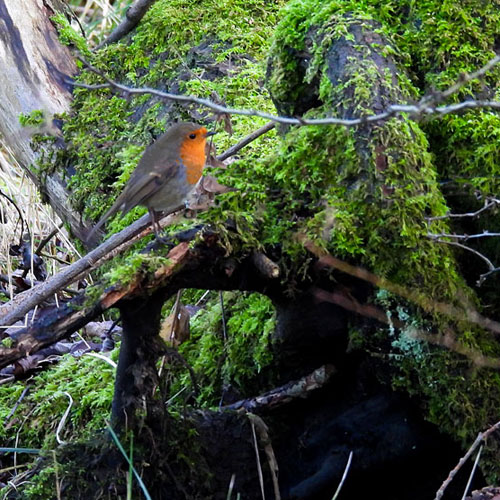
At the far east of the park I discovered a pair of Bullfinches feeding on shrubbery. I also snapped a
friendly Robin and one of several Long-tailed Tits that were flitting between the dense branches of
the bushes and trees .
| Male Bullfinch |
Female Bullfinch |
 |
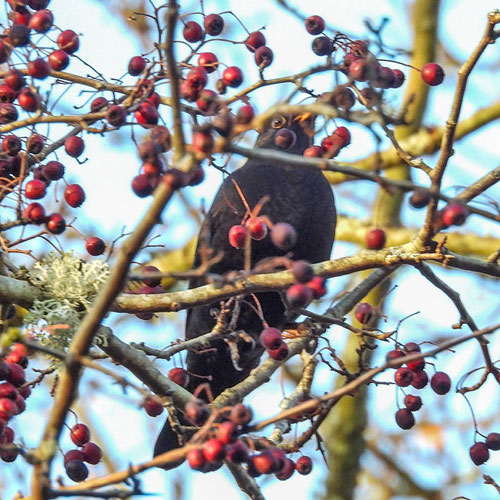
 |
| Robin |
Long - tailed Tit |
 |
 |
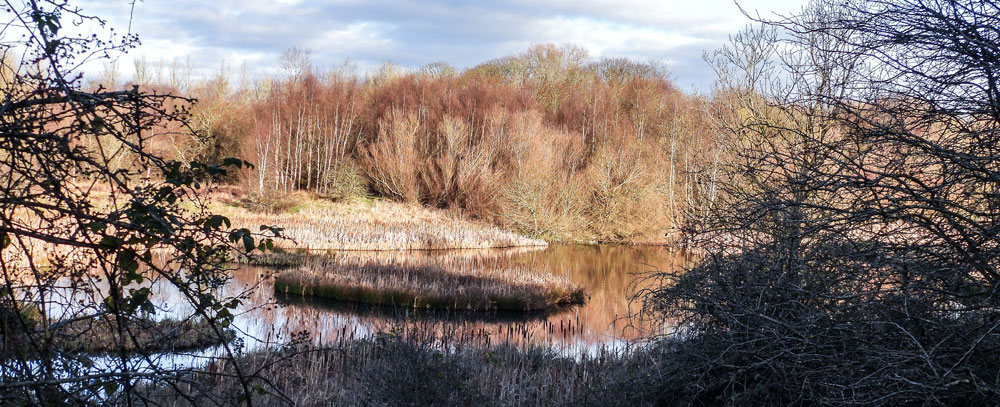
The wee pond at the east end of the park was bathed in warm winter light.
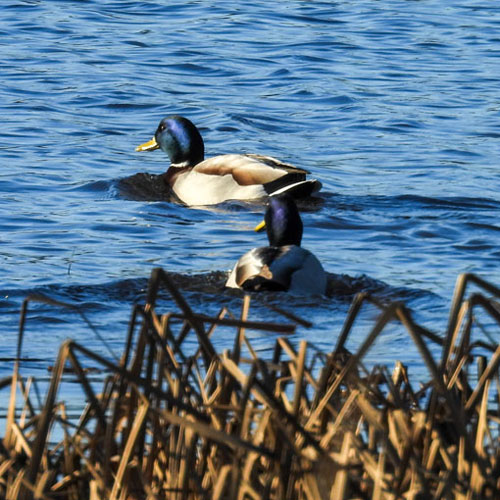
Disappointingly, there were only two birds on the pond: a drake Goosander and a drake Mallard.
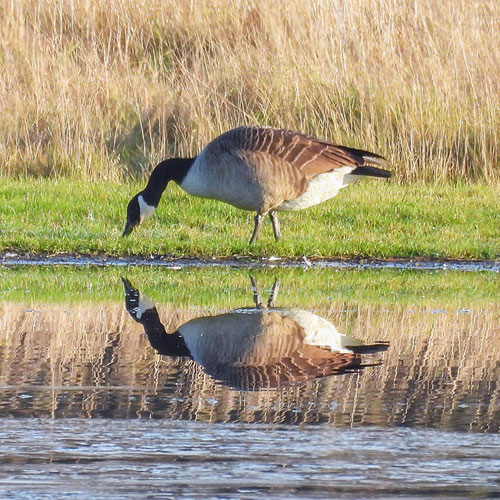
On the north side of the loch, a single Canada Goose looked a bit lost as it paddled aimlessly near
the water’s edge. A female Goosander was also on its own, but was actively diving for fish.
| Drake Goosander |
Drake Mallard |
 |
 |
| Canada Goose |
Female Goosander |
 |
 |
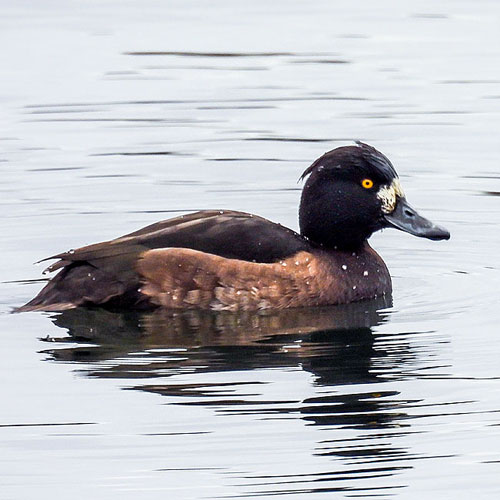
As I neared the car park there were many ducks gather on the loch. Goldeneyes, Gadwalls and
Tufted Ducks were present in good numbers.
| Female Goldeneye |
Gadwall |
 |
 |
| Drake Tufted Duck |
Female Tufted Duck |
 |
 |
I am fairly pleased that I managed to photograph 31 species this week. My favourites are the
bullfinches, dunnock, goldeneye swimming in the channel and little egret. Very cold weather is
predicted for next week (next year!), hopefully with some sunny conditions. I’ll wear my long johns
Week ending: 21st
December : Musselburgh
Tuesday was an exceptional day in a rather
dreary week of weather: dry and calm with unbroken sunshine in the late morning and afternoon.
| Cloud |
Rain & Prediction |
Tides |
 |
 |
 |
I
travelled to
Musselburgh, which is probably our most reliable site for turning up
plenty of sightings -
and my visit this week would be no exception. I parked on Goosegreen Place near the Cadet
Hall by the mouth of the River
Esk . The view
below is taken from its east bank looking west towards Portobello and
Leith, with Arthur’s Seat
prominent in the background.
As
I took that shot I
became aware of twittering coming from the fence to my right. At first I thought there were House Sparrows on the
fence, but I soon realised that they were Twite
which were retreating to the fence when disturbed from....
…their
foraging on the short grass that runs between the road and the
riverside fence. Grass
seeds had been scattered on bare patches in the grass, and the birds
seemed to be making a
meal of these.
The rich amber light of
the low winter sunlight enriched the Twite’s plumage. I cast
my attention across the
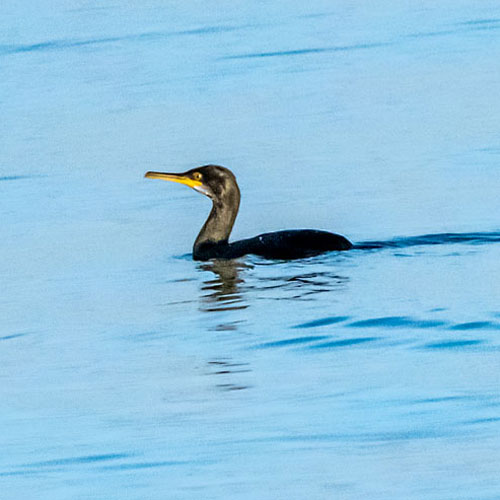
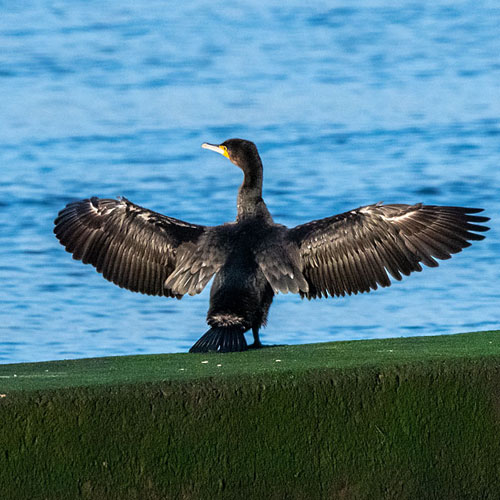
mouth of the river and saw that there were a couple of Cormorants
perched on the opposite
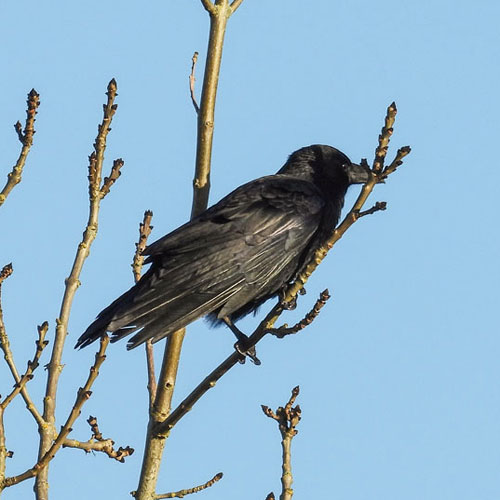
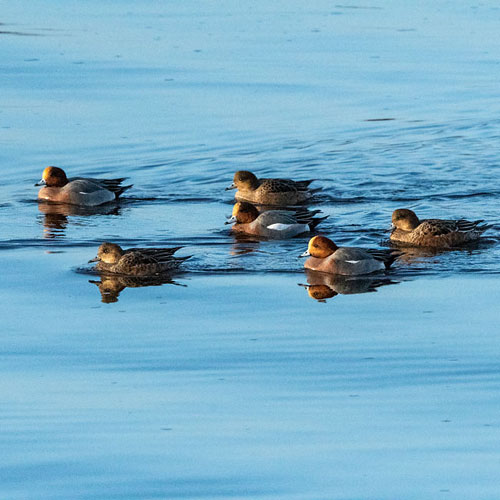
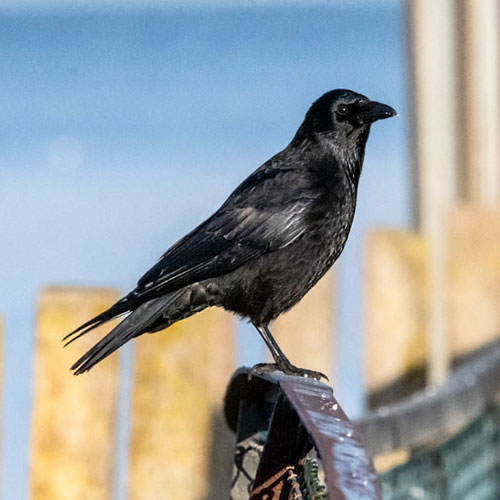
bank. A large group of Wigeon paddled into view. A Carrion Crow
displaced the wee
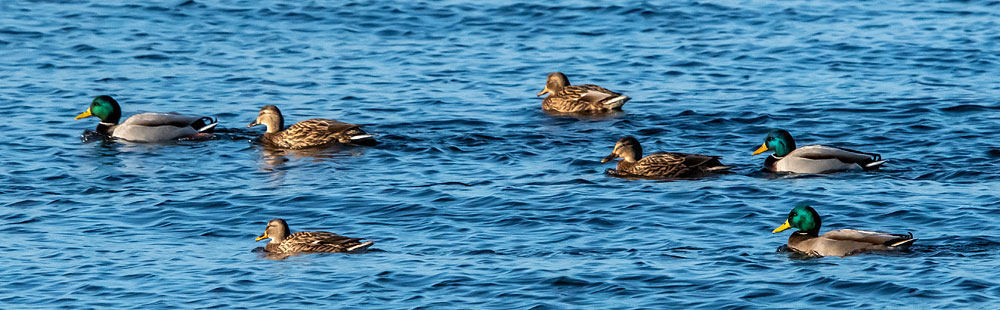
Twites from their safe perches on the fence. A pair of Mallards flew in
and landed on the river near
where I was standing. The female seemed to have been getting some
unwanted attention from the the drake ...
| Twite... |
|
 |
 |
| Cormorant |
Wigeon |
 |
 |
| Carrion Crow |
Mallard |
 |
 |
…..and saw
off the drake, only to join another nearby drake - its mate I would
guess.
Some Oystercatchers,
Carrion Crows and Black-headed and Herring Gulls were standing on a spit of sand a bit
further west of the river.
On another sand spit a
bit further west there were eight Ringed Plovers resting at high tide.
Pleased with the first
few minutes of my visit I walked to the West Scrapes (which I have
formerly called the
“New Scrapes”). I started at the first hide on the
south side of the scrapes and
immediately noticed a
large group of Gadwalls
active near a small island facing the hide. A Feral Pigeon was
in the grass near the ducks and I noticed a single drake Shoveler
was
feeding with the
Gadwalls. A small raptor flew by briefly - probably it was a Kestrel,
but thepicture is
inconclusive.
There was no doubting the identity of the Grey Heron that was standing
in long grass to the
left
of the hide- or that of the Mute Swan that had clambered up and over the bund and into the moat.
| Gadwall |
Feral Pigeon |
 |
 |
| Gadwall / Shoveler |
Raptor!! |
 |
 |
| Juvenile Grey Heron |
Mute Swan |
 |
 |
Further along the scrape
from where I saw the Gadwalls there were a flock of Teal on the edges of a little island.
From the next hide on
the south side of the scrapes I had good views of more Wigeon. On my way to the east hide I
found a
Meadow Buttercup still in bloom. A
Reed Bunting,
annoyingly back-lit, was
calling from a low bush. After that, just before the hide, I stopped
for a few minutes to
photograph a pair of Stonechats
that were repeatedly hopping
down from tall
vegetation to catch
invertebrates.
| Wigeon... |
|
 |
 |
| Meadow Buttercup |
Reed Bunting |
 |
 |
| Male Stonechat |
Female Stonechat |
 |
 |
Below is the view from
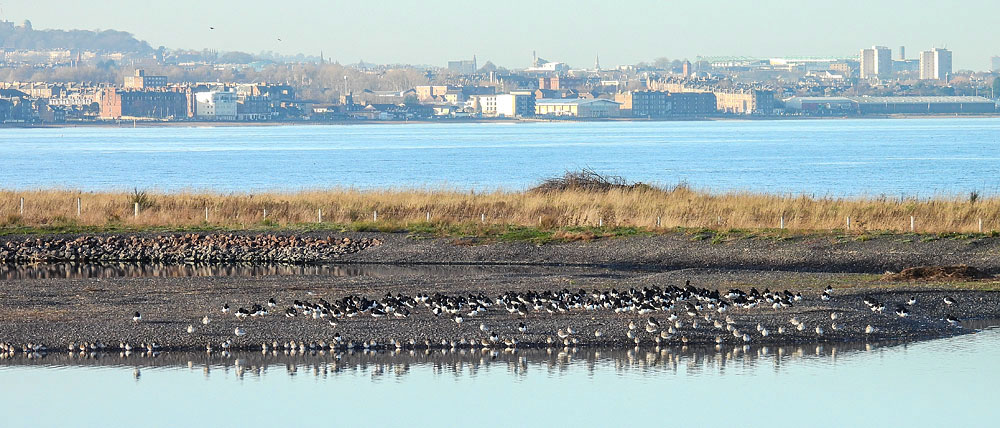
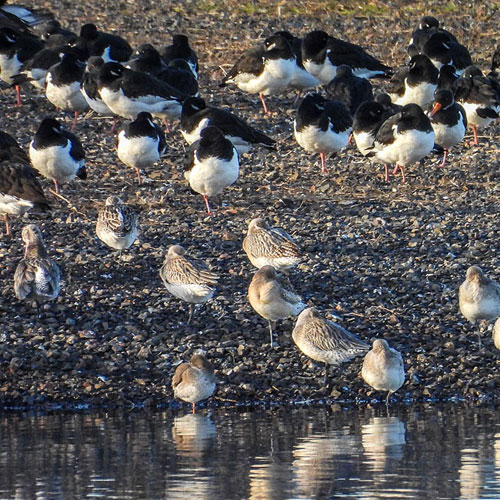
the east hide, looking west towards Leith. Note the obvious and sizeable flock of Oystercatchers.
Zooming in with my
Coolpix P950, I picked out a line of snoozing Redshanks near the Oystercatchers.
Also snoozing amongst
the Oystercatchers were some Bar-tailed
Godwits. I did manage to
catch a bird that
wasn’t sleeping: an Oystercatcher stretching its wing.
Looking far to the right of
the hide I saw a quartet
of Feral Pigeons having a water bath near a pair of dabbling Wigeons.
There was also a couple
of female Goosanders diving for food. I left the hide and headed for the sea wall which
I’d follow back to the car. But near the hide I found another
Carrion Crow that was
perched on the branch of
a tall pathside bush and I also came across a late-flowering crucifer, probably Charlock.
| Bar - tailed Godwit |
Oystercatcher |
 |
 |
| Feral Pigeon |
Female Goosander |
 |
 |
| Carrion Crow |
Charlock |
 |
 |
Initially, at the
seawall, I was quite disappointed. I scanned the seascape and there was
only a
“raft”
of even more Wigeon…
…..and even
more Mallards.
So I shrugged my
shoulders and set off back to the car. However, after I’d
taken only a half dozen
steps, I heard the
distinctive calls of Long-tailed
Ducks. I’d been too
quick to dismiss the
area and I’d
missed the diving ducks. A decent scan of the scene produced some
decent shots of the
mobile ducks. I
followed these with shots of the flypast of a Cormorant and also of a
Shag that was diving in
the
same area as the ducks.
After that, there were
even more photo-opportunities: a distant Red-breasted Merganser, a
pretty Mute Swan that
cruised
past and a low flypast of another Mute Swan that was only only about 10m from the seawall. I
also spotted a Common Gull bobbing in the water near one of the
Longtailed Ducks.
After lunch I relocated
to the Levenhall Links car park and walked to the Musselburgh Lagoons (which, in previous
blogs, I’ve called the “Old Scrapes”).
From the middle hide I was pleased to see that there were
quite a few birds assembled on and around the far scrape facing the
hide. A
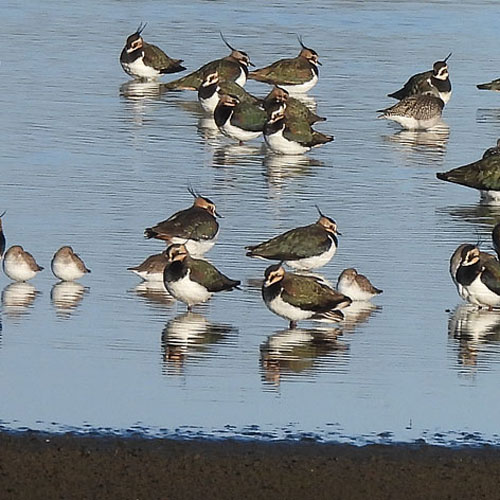
large flock of Lapwings
was resting in the shallow scrape. Prominent behind that scrape was a family of Mute Swans -
two adults and three large cygnets.
My camera zoom revealed
that there were Grey
Plovers, Dunlin and at least one Curlew resting with the
Lapwings. Far to the left of the hide, Canada Geese were grazing beside
the scrape.
There was a line of
eight Canada Geese.
Without any obvious
stimulus, the family of Mute Swans launched themselves onto and over the scrape, putting up the
Lapwings and also disturbing a bird I didn’t notice until I
reviewed the picture
below - a
Pheasant. Finally I moved to the left-most hide where I photographed an
Oystercatcher that was
standing close to the hide. I also snapped a nice shot of a Redshank
that was wading in the
scrape. My final shot was of a lone Shelduck dabbling in the same
scrape as the Redshank.
It was a very successful
and enjoyable day out at Musselburgh. Of the 35 species photographed, my favourites are the
Twites, Gadwalls, Stonechats, Long-tailed Ducks, Cormorant and Mute Swan flypasts and the
Shelduck. The weather next week, Christmas Week, is predicted to be
fairly pleasant.
I’ll try to fit in a few walks with my camera between
seasonal festivities. Have a Merry Christmas.
Week ending: 14th
December: Strathclyde
Country Park, RSPB
Baron’s Haugh
The weather fronts kept on coming this week, with Friday being the only
decent day for nature photography.
Monday,
8th December: Strathclyde Country Park
There were, however, a few
brief periods of dry, and mainly dull conditions on Monday when I
visited Strathclyde Country Park. I got the week off to a splendid
start though, when I parked in car park 4 and saw a very impressive
flock of over 10 cormorants on the loch.
A rare break in the clouds
illuminated their large bills.….
….which became
aligned like bayoneted rifles of soldiers on
parade.
As I rounded the north end
of the loch, I spotted a tree loaded with
green apples (although I don’t know the variety)
hanging over the green waters of the moat that isolates the
Starter’s tower and boat
quays. There were several Greylag Geese, Carrion Crows and Magpies on
the grassy area in front of the tower.
|
Greylag Goose |
 |
 |
| Hooded X Carrion Crow |
Magpie |
 |
 |
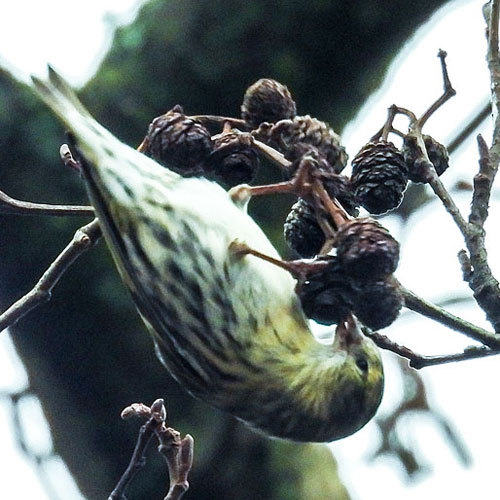
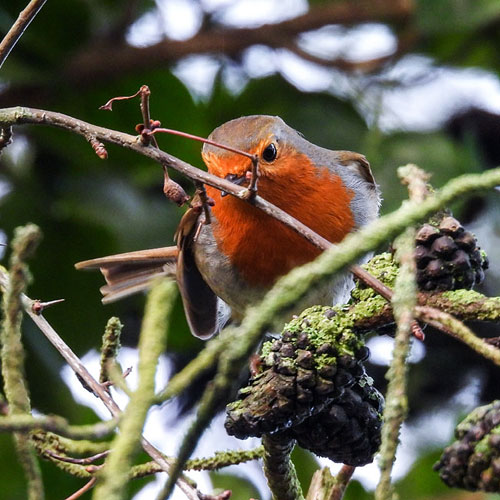
The Alder trees behind the
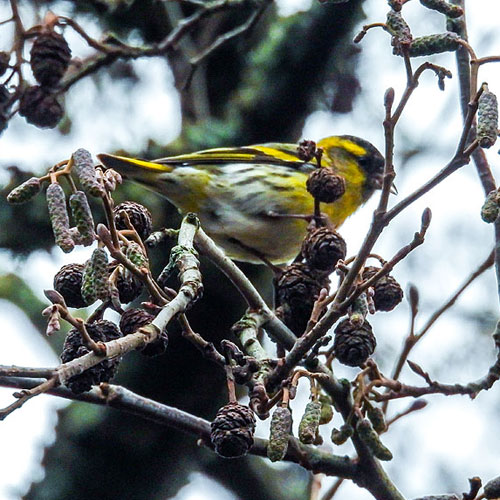
tower hosted a flock of hungry twittering Siskins as
well as a Robin and a few Goldfinches. The light level had worsened
though.
Male Siskin
|
Female Siskin |
 |
 |
| Robin |
Goldfinch |
 |
 |
As I searched the trees for
the Siskins my eye caught sight of a Bank
Vole foraging in the leaf litter below the trees.
There was also a bracket fungus, probably
a Hoof
Fungus. On my way back to the car I came across another
fungus (as yet,
unidentified) that had infested a log. As I sat in my car with a
biscuit and a wee cup of tea, I became aware
of a Mistle
Thrush perched very close on a small roadside tree. After I
snapped the rather
accommodating Thrush, a Blackbird
flew onto a neighbouring tree.
Friday,
12th December: RSPB Baron’s Haugh
On Friday the sky was blue and it seemed the weather predictions were
correct. I drove to Motherwell and soon was looking down the hill to
the reserve.
As I walked down the hill I
watched a Grey Squirrel climb a Hawthorn
bush to munch Haw berries. A Magpie was feeding in the field and I
spotted a Mistle Thrush
preening on another Hawthorn bush in the middle of the field.
I entered the Marsh Hide
and surveyed the view and …
…. was
immediately taken by the sight of a Coot causing
circular ripples in the calm waters of the scrapes.
A busy Moorhen was paddling
with purpose into the middle of the water
in front of the hide. A lot further from the hide a Mute Swan was
dipping its head into the water
of a hidden channel. There were also a few Herring Gulls and
Black-headed Gulls on the scrapes,
always on the lookout for easy meals - such as pinching the fish caught
by a Little Grebe. A pair
of Gadwalls
that had been tucked behind reeds came into view when the female began
foraging.
There were also a few Teal
at the back of the scrape near another Coot.
I had a wee look at the marsh area to the left of the hide. Although
the area was backlit by
the low Sun, I was surprised to find a Little
Egret prowling around the reedy
shallows…..
……as
it searched for small fish and invertebrates.
I left the Marsh hide and
walked the couple of hundred metres to the
Causeway hide where I expected to find reported Whooper
Swans - and I
wasn’t disappointed. I counted 11 Whoopers lined up along the
edge of the reeds.
They were well-illuminated
by the slightly amber sunlight. A few
Mallards were paddling rather aimlessly near the swans, and I thought
there were another two about
80m out. When I viewed them
with my Coolpix P950 camera zoom they turned out to be a pair of
Goldeneyes.
Otherwise the view from the
Causeway hide was
“quiet”. However, I was satisfied with the few
birds I’d photographed. I trudged back up the brae, snapping
a Carrion Crow and Blackbird on the way. I was delighted to get a
couple of shots of a Nuthatch
on the damaged trunk of a Horse
Chestnut tree.
At the top of the hill I
nearly got a good photo of a Redwing.
Undeterred I searched for another and came across one on high on a
branch - but some 50m away. However, I
finally got a satisfactory picture just before I reached the car park.
My final shot
was of a group of what I thought were more Redwings ,
but on inspection of the shot,
realised they were Fieldfares.
It had been the day of the Thrushes.
With 30 species
photographed I consider the couple of brief outing in
an otherwise rotten week of weather, to have been a success. My
favourites are the 100+ Cormorant,
Thrushes (Mistle Thrush, Redwing and Fieldfare), Whoopers, Siskins,
Nuthatch, Bank Vole and
Little Egret. There will be more wet and windy weather next week -
interspersed with a few goos days - or so they say,
Week ending: 7th December: Broadwood
Loch, Hogganfield
Park LNR
In another week where we were bombarded with a seemingly never-ending
series of weather
fronts, for the second week running the best day of weather was
Tuesday. This week I decided to
visit a couple of relatively local sites, and I wasn’t
disappointed with my sightings.
| Cloud |
Rain |
 |
 |
Tuesday AM, 2nd
December: Broadwood Loch
On Tuesday morning,
having read reports that there was a drake Smew
(probably the same bird
that visited there last year) on Broadwood Loch in Cumbernauld, I set
off to see if I could get
some pictures of the wee white duck. On arrival the sky was mainly blue
with frequent sunny
intervals. The light was tinged with amber due to the low level of the
Autumn (“metrological” Winter) Sun.
As
usual, at the car park, there were a fair few birds gathered on the
grassy banks and at the
water’s edge. Coots, Canada Geese, Cormorants and Moorhens
were feeding, stretching and
preening.
| Coot |
Canada Goose |
 |
 |
| Cormorant |
Moorhen |
 |
 |
I
started my usual anti-clockwise circuit of the loch and noticed a raft
of at least a dozen
Goosanders drifting northwards along the loch.
There
were quite few Wigeons and Mallards dabbling fairly near the banks.
A
Dunnock
caught my eye as it belted out its tuneful call from the branch of a
lochside tree. At the
boardwalk there were Tufted
Ducks and I also saw a young female Lesser
Scaup, as
well as a drake Wigeon still in eclipse plumage.
| Dunnock |
Female Lesser Scaup |
 |
 |
| Tufted Duck |
Wigeon in Eclipse plumage |
 |
 |
Before
the north end of the loch I photographed a beautiful Mute Swan as it
dipped its head in an
out of the water searching for weed.
Also,
more Tufted Ducks and Mute Swans were drifting about 40m out. I also
snapped a friendly
Robin that was watching me from the branches of a pathside tree. After
that I heard the familiar
calls of Long-tailed
Tits and it wasn’t long before they moved onto the
same tree as the Robin.
With patience, I managed a shot of one of the nippy wee birds.
| Female Tufted Duck |
Mute Swan |
 |
 |
| Robin |
Long - tailed Tit |
 |
 |
In
the time I’d walked almost the length of the loch, the raft
of Goosanders had drifted almost the same distance.
The
flock of Goosanders contained mainly drakes, with a few females -
perhaps the drakes were
courting the females. I managed to photograph another Long-tailed Tit
and soon after spotted the
Smew
as it swam near the opposite bank, over 100m away. As I rounded the
head of the loch there
was only a lone Coot feeding on weed.
| Goosander |
Long - tailed Tit |
 |
 |
| Smew |
Coot |
 |
 |
When
I arrived at the northwest banks of the loch the Smew was diving for
fish, only about 30 to
40m out, and I managed some satisfactory shots. On the remaining route
back to the car I was
lucky to find a line of fence posts on top of which, a kind walker had
left bird seed. Luckily for me
the seed attracted a House Sparrow, Coal Tits and Blue Tits
 |
 |
| Robin |
House Sparrow |
 |
 |
| Coal Tit |
Blue Tit |
 |
 |
Below
is the view from the road that leads to the car park. Spoiled by the
power cables?
Tuesday PM, 2nd
December: Hogganfield Park LNR
In the afternoon I
relocated to Hogganfield Park in the east side of Glasgow. Social media
had reported the return
of Whooper
Swans a tad later that usual, so it would be nice
to see them. The view of the loch from the car was
familiar - a right stramash as the birds battled for slices of bread.
The
feisty Goosanders were not afraid to challenge the much bigger Mute
Swans. All
becomes calm until the next slice is thrown. Moorhens get caught up in
the fervour but they really
shouldn’t since bread has little if any nutritional value to
them. Swans too get little from bread.
Seed is much better for
them.
If
you studied the
“stramash” picture above, you
should have noticed there was a Whooper Swan in the mix. Below is a much better
image of the same bird.
I
counted only four Whoopers. Usually there are more than that. Other
locations in the area have
reported Whooper Swans so perhaps the usual migrants have preferred
there, maybe disturbed
by the increased visitor and traffic due to the very successful
“Golf It” project.
They
are very bonny birds.
Below
is the view of the island. The light was fading fast. It was even more
amber - golden even.
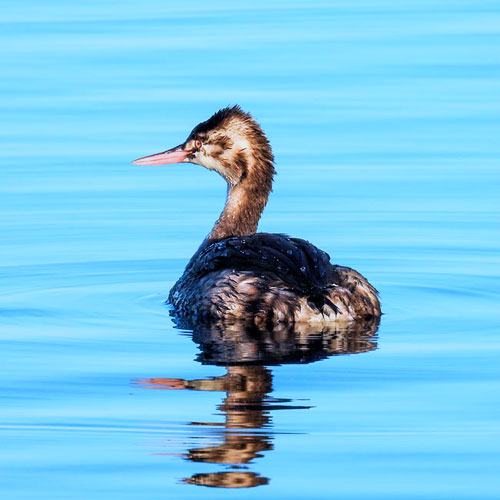
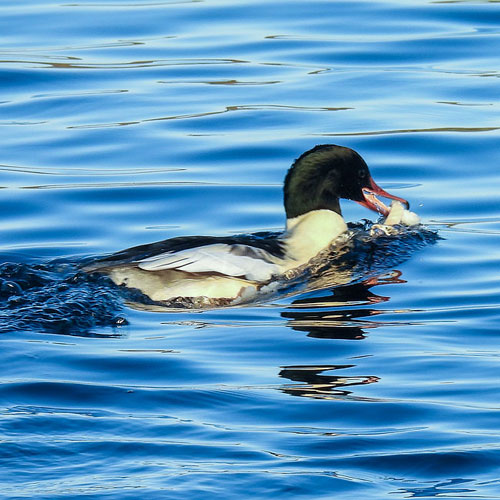
I
did though get some decent photos in the low light level on the west
side of the loch but didn’t manage a circuit of the loch. The first of
these was of a young Great
Crested Grebe diving
about 10 metres from the bank. I followed this with a shot of a drake
Goosander that had
somehow escaped the
feeding melee clutching a slice of bread in its serrated beak. A pair of Mallards and a Black-headed Gull were next
to catch my eye as they followed each other around one of the artificial islands.
| Juvenile Great Crested Grebe |
Drake Goosander |
 |
 |
| Male and Female Mallard |
Black - headed Gull |
 |
 |
A group of leisurely Tufted Ducks were
preening in an otherwise unoccupied area of the loch. One of the drakes was particularly active as it
followed one of the females - probably its mate. My final shots of the day, and in fact, of the week,
were of yet another Long -tailed Tit that was foraging on a tall loch side willow tree.
With
21 bird species photographed over a few hours, I consider my day out to
have been a success. My
favourites were the targets of the day, the Smew and the Whooper Swans.
However the unexpected
stars of the day must be the Long-tailed Tits for their multiple
appearances, and
the young female Lesser
Scaup. The weather for next week is very gloomy and includes the possibility of a storm - so my challenge
will be to get any pictures I can.
Back
To Top
|